We use cookies and third-party services that store or retrieve information on the end device of our visitors. This data is processed and used to optimize our website and continuously improve it. We require your consent fro the storage, retrieval, and processing of this data. You can revoke your consent at any time by clicking on a link in the bottom section of our website. Privacy Policy.
Customise Consent Preferences
We use cookies to help you navigate efficiently and perform certain functions. You will find detailed information about all cookies under each consent category below.
The cookies that are categorised as "Necessary" are stored on your browser as they are essential for enabling the basic functionalities of the site. ...
Always Active
Necessary cookies are required to enable the basic features of this site, such as providing secure log-in or adjusting your consent preferences. These cookies do not store any personally identifiable data.
Cookie
gf_email_otp_seed_3
Duration
2 hours
Description
Used to temporarily store the OTP verification seed required for secure form or email verification.
Cookie
gf_email_otp_seed_12
Duration
2 hours
Description
Used to temporarily store the OTP verification seed required for secure form or email verification.
Cookie
gf_email_otp_seed_6
Duration
2 hours
Description
Used to temporarily store the OTP verification seed required for secure form or email verification.
Cookie
gf_email_otp_seed_1
Duration
2 hours
Description
Used to temporarily store the OTP verification seed required for secure form or email verification.
Cookie
gf_email_otp_seed_4
Duration
2 hours
Description
Used to temporarily store the OTP verification seed required for secure form or email verification.
Cookie
gf_email_otp_seed_10
Duration
2 hours
Description
Used to temporarily store the OTP verification seed required for secure form or email verification.
Cookie
gf_email_otp_seed_5
Duration
2 hours
Description
Used to temporarily store the OTP verification seed required for secure form or email verification.
Cookie
VISITOR_PRIVACY_METADATA
Duration
6 months
Description
YouTube sets this cookie to store the user's cookie consent state for the current domain.
Cookie
GAESA
Duration
1 month
Description
Description is currently not available.
Cookie
aquaSessionId2
Duration
2 days
Description
Description is currently not available.
Cookie
aquaXAuthId2
Duration
2 days
Description
Description is currently not available.
Cookie
rc::a
Duration
Never Expires
Description
This cookie is set by the Google recaptcha service to identify bots to protect the website against malicious spam attacks.
Cookie
rc::c
Duration
session
Description
This cookie is set by the Google recaptcha service to identify bots to protect the website against malicious spam attacks.
Cookie
__Secure-ENID
Duration
1 year 1 month
Description
The __Secure-ENID cookie is a type of secure cookie used for authentication and to ensure the security of user sessions.
Cookie
LS_CSRF_TOKEN
Duration
session
Description
Cloudflare sets this cookie to track users’ activities across multiple websites. It expires once the browser is closed.
Cookie
zalb_*
Duration
session
Description
Zoho sets this cookie for load balancing and session stickiness. It ensures that user requests are consistently directed to the same server during a session, helping maintain session integrity and improving website performance.
Cookie
GCLB
Duration
session
Description
This cookie is known as Google Cloud Load Balancer set by the provider Google. This cookie is used for external HTTPS load balancing of the cloud infrastructure with Google.
Cookie
cookieyes-*
Duration
1 year
Description
CookieYes sets this cookie for consent solution management.
Cookie
__cf_bm
Duration
1 hour
Description
This cookie, set by Cloudflare, is used to support Cloudflare Bot Management.
Functional cookies help perform certain functionalities like sharing the content of the website on social media platforms, collecting feedback, and other third-party features.
Cookie
VISITOR_INFO1_LIVE
Duration
6 months
Description
A cookie set by YouTube to measure bandwidth that determines whether the user gets the new or old player interface.
Cookie
ytidb::LAST_RESULT_ENTRY_KEY
Duration
Never Expires
Description
The cookie ytidb::LAST_RESULT_ENTRY_KEY is used by YouTube to store the last search result entry that was clicked by the user. This information is used to improve the user experience by providing more relevant search results in the future.
Cookie
__session
Duration
1 year 1 month 4 days
Description
GitBook sets this cookie for logging in.
Cookie
uesign
Duration
1 month
Description
Zoho sets this cookie for the Visitor Live Chat.
Cookie
_tldtest_*
Duration
session
Description
Amplitude sets this cookie to determine the highest-level domain where cookies can be set. Deleted after testing.
Cookie
lidc
Duration
1 day
Description
LinkedIn sets the lidc cookie to facilitate data center selection.
Cookie
li_gc
Duration
6 months
Description
Linkedin set this cookie for storing visitor's consent regarding using cookies for non-essential purposes.
Analytical cookies are used to understand how visitors interact with the website. These cookies help provide information on metrics such as the number of visitors, bounce rate, traffic source, etc.
Cookie
gf_visitor_source
Duration
7 days
Description
Stores visitor attribution data such as source, medium, campaign, content, term, and location for analytics and lead attribution.
Cookie
gf_visitor_medium
Duration
7 days
Description
Stores visitor attribution data such as source, medium, campaign, content, term, and location for analytics and lead attribution.
Cookie
gf_visitor_campaign
Duration
7 days
Description
Stores visitor attribution data such as source, medium, campaign, content, term, and location for analytics and lead attribution.
Cookie
gf_visitor_content
Duration
7 days
Description
Stores visitor attribution data such as source, medium, campaign, content, term, and location for analytics and lead attribution.
Cookie
gf_visitor_term
Duration
7 days
Description
Stores visitor attribution data such as source, medium, campaign, content, term, and location for analytics and lead attribution.
Cookie
gf_visitor_location
Duration
7 days
Description
Stores visitor attribution data such as source, medium, campaign, content, term, and location for analytics and lead attribution.
Cookie
ga_session_duration
Duration
1 hour
Description
Stores visitor attribution data such as source, medium, campaign, content, term, and location for analytics and lead attribution.
Cookie
_ga_*
Duration
1 year 1 month 4 days
Description
Google Analytics sets this cookie to store and count page views.
Cookie
_ga
Duration
1 year 1 month 4 days
Description
Google Analytics sets this cookie to calculate visitor, session and campaign data and track site usage for the site's analytics report. The cookie stores information anonymously and assigns a randomly generated number to recognise unique visitors.
Cookie
amp_*
Duration
1 year
Description
Amplitude sets this cookie for session tracking for analytics purposes.
Cookie
YSC
Duration
session
Description
YSC cookie is set by Youtube and is used to track the views of embedded videos on Youtube pages.
Cookie
amplitude_device_id
Duration
session
Description
No description available.
Cookie
loom_anon_comment
Duration
1 year
Description
No description available.
Cookie
loom_referral_video
Duration
session
Description
Description is currently not available.
Cookie
__Host-psifi.analyticsTrace
Duration
6 hours
Description
Description is currently not available.
Cookie
__Host-psifi.analyticsTraceV2
Duration
6 hours
Description
Description is currently not available.
Cookie
_cs_id
Duration
1 year 1 month
Description
This cookie is used to store the ContentSquare's user identifier ID. This is a persistent cookie and expires after 13 months.
Cookie
_cs_s
Duration
1 hour
Description
This cookie is used to store the number of page's viewed by a visitor within the session for ContentSquare's solution.
Cookie
ai_session
Duration
1 hour
Description
This is a unique anonymous session identifier cookie set by Microsoft Application Insights software to gather statistical usage and telemetry data for apps built on the Azure cloud platform.
Cookie
_hjSessionUser_*
Duration
1 year
Description
Hotjar sets this cookie to ensure data from subsequent visits to the same site is attributed to the same user ID, which persists in the Hotjar User ID, which is unique to that site.
Cookie
_hjSession_*
Duration
1 hour
Description
Hotjar sets this cookie to ensure data from subsequent visits to the same site is attributed to the same user ID, which persists in the Hotjar User ID, which is unique to that site.
Cookie
ajs_anonymous_id
Duration
1 year
Description
This cookie is set by Segment to count the number of people who visit a certain site by tracking if they have visited before.
Cookie
_cs_c
Duration
1 year 1 month
Description
This cookie is used by Contentsquare to store the user's consent preference for analytics and session replay tracking.
Cookie
utm_medium
Duration
7 days
Description
This cookie is used to record from where the visitor came to the website orginally. This information is used by the website operator to know the efficiency of their marketing.
Cookie
utm_source
Duration
7 days
Description
This cookie is used to record from where the visitor came to the website orginally. This information is used by the website operator to know the efficiency of their marketing.
Cookie
utm_campaign
Duration
7 days
Description
Google Ad Services sets this cookie to store session campaign value if present.
Cookie
utm_content
Duration
7 days
Description
This cookie is used for storing the session content value if present.
Cookie
utm_term
Duration
7 days
Description
This cookie is used to record from where the visitor came to the website orginally. This information is used by the website operator to know the efficiency of their marketing.
Cookie
amp_cookie_test*
Duration
session
Description
Amplitude sets this cookie to test if cookies are enabled in the user’s browser. It is used during SDK initialisation and is automatically removed after the check.
Cookie
utsdb
Duration
session
Description
Zoho SalesIQ sets this cookie to register data on visitor's website behaviour.
Performance cookies are used to understand and analyse the key performance indexes of the website which helps in delivering a better user experience for the visitors.
Cookie
_uetsid
Duration
1 day
Description
Bing Ads sets this cookie to engage with a user that has previously visited the website.
Cookie
_uetvid
Duration
1 year 24 days
Description
Bing Ads sets this cookie to engage with a user that has previously visited the website.
Advertisement cookies are used to provide visitors with customised advertisements based on the pages you visited previously and to analyse the effectiveness of the ad campaigns.
Cookie
_gcl_au
Duration
3 months
Description
Google Tag Manager sets this cookie to experiment advertisement efficiency of websites using their services.
Cookie
__Secure-ROLLOUT_TOKEN
Duration
6 months
Description
YouTube sets this cookie to manage feature rollout and experimentation. It helps Google control which new features or interface changes are shown to users as part of testing and staged rollouts, ensuring consistent experience for a given user during an experiment.
Cookie
__Secure-YEC
Duration
past
Description
Description is currently not available.
Cookie
__Secure-YNID
Duration
6 months
Description
YouTube cookie used to protect user security and prevent fraud, especially during the login process.
Cookie
test_cookie
Duration
15 minutes
Description
doubleclick.net sets this cookie to determine if the user's browser supports cookies.
Cookie
MUID
Duration
1 year 24 days
Description
Bing sets this cookie to recognise unique web browsers visiting Microsoft sites. This cookie is used for advertising, site analytics, and other operations.
Cookie
ai_user
Duration
1 year
Description
Microsoft Azure sets this cookie as a unique user identifier cookie, enabling counting of the number of users accessing the application over time.
Cookie
NID
Duration
6 months
Description
Google sets the cookie for advertising purposes; to limit the number of times the user sees an ad, to unwanted mute ads, and to measure the effectiveness of ads.
Cookie
__Host-GAPS
Duration
2 years
Description
This cookie allows the website to identify a user and provide enhanced functionality and personalisation.
Cookie
bcookie
Duration
1 year
Description
LinkedIn sets this cookie from LinkedIn share buttons and ad tags to recognize browser IDs.
Cookie
IDE
Duration
1 year 24 days 1 minute
Description
Google DoubleClick IDE cookies store information about how the user uses the website to present them with relevant ads according to the user profile.
Cookie
guest_id_marketing
Duration
1 year 1 month 4 days
Description
Twitter sets this cookie to identify and track the website visitor.
Cookie
guest_id_ads
Duration
1 year 1 month 4 days
Description
Twitter sets this cookie to identify and track the website visitor.
Cookie
personalization_id
Duration
1 year 1 month 4 days
Description
Twitter sets this cookie to integrate and share features for social media and also store information about how the user uses the website, for tracking and targeting.
Cookie
guest_id
Duration
1 year 1 month 4 days
Description
Twitter sets this cookie to identify and track the website visitor. It registers if a user is signed in to the Twitter platform and collects information about ad preferences.
Other uncategorised cookies are those that are being analysed and have not been classified into a category as yet.
Cookie
_cs_root-domain
Duration
session
Description
Description is currently not available.
Cookie
aquacloudio-_zldp
Duration
1 year 1 month 4 days
Description
Description is currently not available.
Cookie
aquacloudio-_zldt
Duration
1 year 1 month 4 days
Description
Description is currently not available.
Cookie
amplitude_testaqua-cloud.io
Duration
1 year
Description
Description is currently not available.
X
🤖 Exciting new updates to aqua Intelligence are now available! 🎉
Is Manual Testing Dying? All Your Questions & Concerns Covered for 2026
You've probably heard the whispers around the office or seen the LinkedIn posts about the death of manual testing. With automation tools getting smarter and AI entering the chat, it's fair to wonder: Is manual testing dying? Are you—a manual QA tester—facing career extinction?
Let’s cut through the noise. Manual testing isn’t dying—it’s transforming. And that transformation might just be the best thing that could happen to your testing career.
Is Automated Testing Replacing Manual Testing?
Automation has undeniably changed testing. Companies are investing heavily in test automation for reasons that make perfect business sense:
Speed: Automated tests can run thousands of test cases in the time it takes to manually execute dozens
Consistency: Machines don’t get bored, tired, or distracted running the same test for the 100th time
Cost efficiency: While upfront investment is higher, the long-term ROI can be substantial
Continuous integration: Automation fits perfectly into modern CI/CD pipelines
The numbers back this up. According to recent industry surveys:
Most companies report that with mature automation practices, they have 60-80% faster release cycles
This shift has naturally raised concerns among manual testers. If a script can do the job faster and with fewer mistakes, where does that leave the human tester?
Before going into detail about the importance of manual testing, you need a test management solution (TMS) for your efforts. A solution that will help you keep the balance between both approaches. Is that even possible?
Enter aqua cloud, a TMS with super-fast AI capabilities, just built for you. With aqua’s AI, you can generate test cases, requirements, and test data within just 3 clicks, in 98% less time. One-click bug-tracking integration Capture will be just as important in your journey. Automation and project management integrations like Selenium, Jenkins, Ranorex, Jira, and Azure DevOps supercharge your CI/CD practices. However, we know that you still need manual testing too, so aqua delivers an easy-to-use, 0-learning-curve centralised repository for both your automated and manual tests.
Combine all your testing efforts in one 100% AI-powered, centralised platform
Here’s where things get interesting. Despite all the advances in automation and AI, there are fundamental aspects of testing that machines simply can’t handle yet—and may never be able to.
I've been hearing about the demise of manual testing for 20 years. As others have said, it's a good idea to learn coding so you can automate things and ideally be able to take on either a manual testing roll, automated roll, or a hybrid scenario where you can do both (which I personally think would be ideal).
Manual testing brings unique qualities to the table:
Human intuition and curiosity: Humans have an innate ability to follow hunches, spot patterns, and think, “That doesn’t feel right.” We naturally ask “what if?” and explore unexpected paths through software. This intuition leads to discovering bugs that would never be found by following predetermined test cases.
Context and user perspective: A manual QA tester can put themselves in the user’s shoes, understanding frustrations, confusions, and delight in ways automation can’t measure. You know when something feels awkward or unintuitive because you experience it directly.
Adaptability on the fly: When you spot something unusual during testing, you can immediately pivot your approach. Automation follows its script exactly as written—for better or worse.
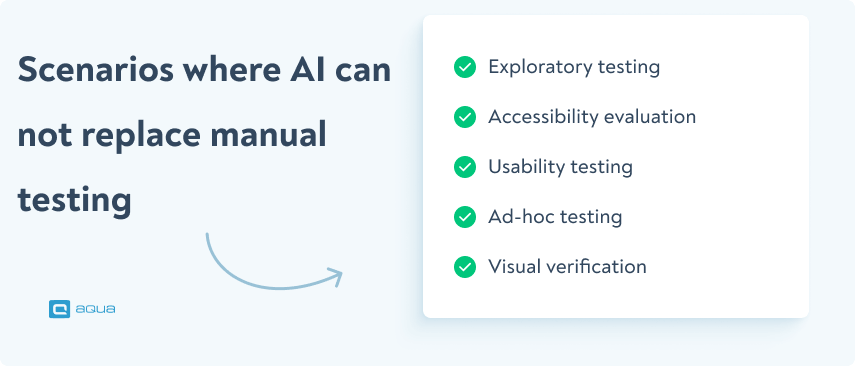
Scenarios where manual testing shines:
Exploratory testing: Finding what you didn’t know to look for
Usability testing: Assessing how it feels to use the software
Ad-hoc testing: Quickly validating specific features or bug fixes
Visual verification: Spotting design inconsistencies and visual bugs
Take the case of a banking app that passed all automated tests with flying colors but failed in real-world testing. Manual testers discovered that while each function worked correctly in isolation, the workflow was frustrating for users who needed to move frequently between sections. No automated test would have caught this fundamental UX issue.
Below you can experience firsthand why manual testing and automation aren’t competitors, they’re teammates in the fight against software bugs. Deploy different testing strategies against various bug types and discover which approach wins each battle, then unleash the ultimate hybrid combo for maximum effectiveness:
⚔️ Manual vs Automation Battle Arena (Click to open)▼
Discover which testing approach defeats different types of bugs and challenges
BUGS DEFEATED
0
COMBO MULTIPLIER
1x
Choose your testing strategy to defeat incoming bugs!
🧠 Manual Testing Wins
Excels at UX issues, exploratory testing, and discovering unexpected problems that require human intuition.
🤖 Automation Wins
Dominates regression testing, repetitive validations, and consistent bug detection across builds.
✨ Hybrid Power
The ultimate combination - leveraging both approaches creates unbeatable testing coverage and efficiency.
The Complementary Relationship Between Manual and Automated Testing
The most effective QA strategies don’t pit manual testing against automation. Instead, they recognise how these approaches complement each other. It’s not an either/or proposition—it’s a both/and strategy.
This complementary relationship works like this:
Testing Aspect
Automation Strength
Manual Strength
Regression Testing
Efficiently runs hundreds of tests across builds
Identifies edge cases and unexpected impacts
New Features
Validates against specific requirements
Explores how features work in real-world usage
User Experience
Checks technical functionality
Evaluates emotional and practical usability
Test Coverage
Ensures broad coverage across platforms
Provides deep coverage on critical paths
Bug Detection
Finds consistent, predictable issues
Discovers unpredictable, context-specific bugs
The hybrid testing approach combines the reliability and efficiency of automation with the creativity and intuition of manual testing. Companies that succeed with this balanced approach typically see:
Faster release cycles with fewer critical bugs
Better user satisfaction scores
More efficient use of testing resources
Greater test coverage across all aspects of quality
As Qualizeal points out, in the coming years, over 80% of test automation frameworks will incorporate AI-based self-healing capabilities. However, these technologies are designed to enhance manual testing rather than replace it.
Manual testing can never die because machines can only do what can be taught to them. In automation testing we can not write each and every small negative scenario until such advance technology comes which can read the requirement matrix and test the whole system without human interference and according to me we are far from that.
To thrive in this overwhelming situation, manual testers should focus on developing skills that complement rather than compete with automation. The manual QA tester of tomorrow isn’t just running test cases—they’re a strategic quality partner with unique skills that automation can’t replace.
Essential skills for the modern manual tester:
Test design thinking: Creating thoughtful, user-centered test scenarios
Technical awareness: Understanding automation capabilities and limitations
Prompt engineering: Being able to train AI algorithms through sophisticated, back-and-forth prompts
Critical analysis: Evaluating test results in context and identifying patterns
Domain expertise: Deep knowledge of the business and user needs
Communication skills: Clearly articulating defects and quality concerns
How to level up your manual testing career:
Learn the basics of a test automation tool like Selenium or Cypress—not to become an automation engineer, but to understand how automation works
Develop expertise in exploratory testing methodologies
Get certified in specialized testing areas like security, accessibility, or performance testing
Build your soft skills in communication, storytelling, and influence
Understand the business domain deeply to provide more valuable testing insights
Automation is not really testing, it's automated checks to make sure regressions are detected. Manual testing is still required for confirming something meets acceptance criteria or exploratory testing (which is where most bugs are discovered). Sure automation might mean we need fewer QAs whose job is to just run regression tests, but that's about it. If you're a QA embedded in a Dev team then there is so much you can do besides automation when it comes to driving quality.
Test data generation: AI creating realistic test data sets for manual exploration
Defect analysis: AI helping identify patterns in bug reports to find root causes
According to Stadsolution, “AI is becoming a helpful tool that makes manual testing better and faster,” directly challenging the notion that AI would simply take over testing jobs.
The manual tester of the future will be a skilled quality professional who:
Uses AI tools to focus testing efforts on high-risk areas
Leverages automation for repetitive tasks while focusing on creative testing
Specialises in areas where human judgment remains essential
Serves as the “quality conscience” of development teams
This evolution points to a more interesting, higher-value role for manual testers, not their extinction.
Is Manual Testing Still a Good Career Choice?
If you’re wondering whether manual testing is still a viable career path, the answer is a definite yes—with some caveats.
The key is to evolve with the industry. The days of manually executing hundreds of test cases from a test plan are indeed fading. But the need for creative, user-focused testing is stronger than ever.
Why manual testing remains a solid career choice:
Every company needs testers who can think critically about quality
The human element in testing cannot be automated away
Testing skills provide a foundation for many other tech roles
The hybrid testing approach creates new opportunities for testers with both manual and automation awareness
Research from multiple sources, including arecent LinkedIn analysis, suggests that manual testing roles are evolving rather than disappearing. Companies increasingly seek “hybrid testers” who understand both manual and automated approaches and with strong critical thinking skills.
What is Manual QA Testing Today?
The definition of manual testing has evolved. Today’s manual QA tester isn’t just someone who manually executes test cases—they’re a quality specialist who:
Designs thoughtful test strategies based on user behavior
Conducts exploratory testing to find unpredictable issues
Evaluates the human experience of using software
Serves as the user advocate throughout development
Partners with automation efforts rather than competing with them
The modern manual QA tester might spend less time executing repetitive tests (now handled by automation) and more time on high-value activities like:
Exploratory testing of new features
Analyzing user feedback to identify testing opportunities
Collaborating with automation engineers on test strategy
Conclusion
Is manual testing dying? No—it’s evolving into something potentially more valuable and interesting.
The future belongs to testers who can adapt to changing technology while leveraging the uniquely human qualities that no automation can replace: intuition, creativity, critical thinking, and user empathy. Manual testing isn’t heading for extinction; it’s heading for transformation.
For QA professionals, this evolution presents an opportunity. By developing a blend of manual testing expertise and technical awareness, you can position yourself as an essential quality partner in the development process.
Choosing aqua cloud as your partner for the combined approach will be the best decision you make. 100% traceability, test coverage, and visibility are the prerequisites you need to meet, and aqua delivers that. AI-powered requirements, test case and test data generation takes seconds, and automation integrations supercharge your testing efforts. Multi-language AI-copilot means your manual testers can work all over the world, while centralised repository combines both your automated and manual tests together effortlessly.
Achieve 100% efficiency by combining automated and manual testing
Absolutely! Manual QA builds critical thinking and a keen eye for detail—skills that remain invaluable even in automated environments. It’s a solid foundation for any testing career.
Will automation replace manual testing?
No—automation handles repetitive tasks, but human intuition for UX, edge cases, and exploratory testing is irreplaceable. The future is hybrid.
Is manual QA still in high demand?
Yes! Companies need manual testers for usability, ad-hoc testing, and scenarios where automation falls short (e.g., creative/UX-heavy apps).
What skill can’t be replaced by AI?
Critical judgment—AI can’t replicate human intuition for prioritizing risks, spotting weird edge cases, or understanding nuanced user frustrations.
Can a manual tester become an automation tester?
100%! Start with basics like SQL and Python, then learn tools like Selenium. Many top automation engineers began as manual testers—your domain knowledge gives you an edge.
Stefan is an entrepreneur who deeply believes in technology. With his company, andagon Group, he’s been empowering businesses around the world to build better software through their quality assurance services and products since 2001. Stefan has cultivated a knack for tailoring aqua to seamlessly integrate…
Nurlan, a QA Coordinator & Quality Standards Officer, takes pride in orchestrating seamless QA operations. His expertise in coordinating QA-focused projects and integrating QA solutions has consistently yielded top-tier client satisfaction. Aside from a full-time QA coordinator, Nurlan's role involves creating compelling content that educates…
Home » Best practices » Is Manual Testing Dying? All Your Questions & Concerns Covered for 2026
Do you love testing as we do?
Join our community of enthusiastic experts! Get new posts from the aqua blog directly in your inbox. QA trends, community discussion overviews, insightful tips — you’ll love it!
We're committed to your privacy. Aqua uses the information you provide to us to contact you about our relevant content, products, and services. You may unsubscribe from these communications at any time. For more information, check out our Privacy policy.